 Your Money
Debt Snowball vs. Avalanche: Which Pays Off Faster?
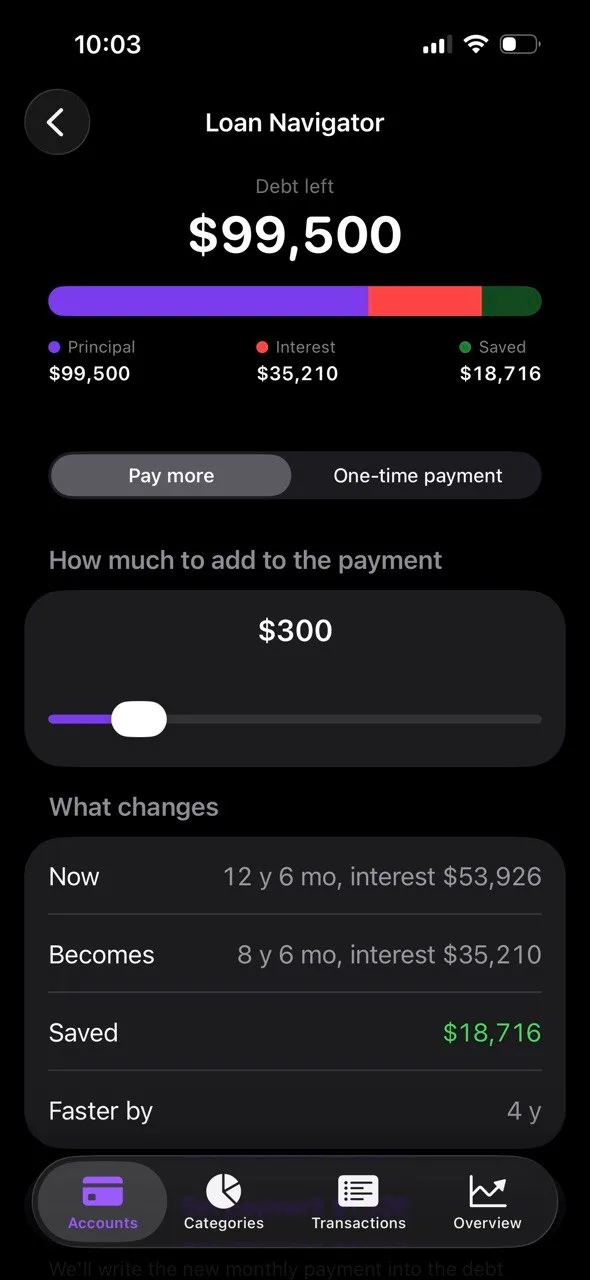
The debt avalanche method saves you more money overall, because it targets your highest-interest debt first. The debt snowball method usually costs a bit more in interest, but it can be easier to stick with because it clears entire balances faster, which keeps momentum going. Both are legitimate, systematic answers to how to pay off debt faster than making minimum payments alone — the difference is only in where you point every extra dollar first.
Here’s how each one actually works, with real numbers, so you can decide which fits how you think about debt.
What is the debt avalanche method?
The avalanche method has one rule: pay the minimum on every debt, and put every extra dollar toward whichever debt has the highest interest rate (APR) — regardless of the balance. Once that debt is paid off, roll its former payment into the next-highest-rate debt, and repeat.
Mathematically, this is the fastest and cheapest way out of debt, because it minimizes total interest paid over time. High-interest debt — most commonly credit cards, which routinely carry rates well above what a personal loan or auto loan charges — costs money every month it exists. Attacking the highest rate first means less of every future payment goes to interest and more goes to actually reducing what’s owed.
The trade-off: if your highest-interest debt also happens to be your largest balance, it can take a while before you see a debt fully disappear. For some people, that long stretch without a “win” makes it harder to stay motivated.
What is the debt snowball method?
The snowball method flips the priority. You still pay the minimum on everything, but extra payments go toward your smallest balance first, regardless of its interest rate. Once that smallest debt is gone, you roll the payment into the next-smallest balance, building momentum as you go — like a snowball picking up size as it rolls downhill.
This method is built around behavioral psychology rather than pure math. The logic is straightforward: seeing a debt hit zero — even a small one — creates a sense of progress that keeps people going. If debt payoff plans have stalled before because it felt like nothing was changing, the snowball’s early wins matter more to actual follow-through than the extra interest it costs.
This isn’t just conventional wisdom — it’s been tested directly. A 2016 study published in the Journal of Consumer Research (Kettle, Trudel, Blanchard, and Häubl) found that closing out a single debt account — regardless of its dollar size — measurably shapes how people perceive their overall progress toward becoming debt-free, and that perceived progress is what sustains follow-through over time. A related 2012 study in the Journal of Marketing Research (Gal and McShane) analyzed real consumer debt data and found that fully closing individual accounts, independent of their balance, was one of the strongest predictors of whether someone went on to eliminate their debt entirely.
The trade-off: because you’re not necessarily targeting the highest interest rate first, you’ll typically pay more in total interest than you would with the avalanche method, and it may take slightly longer overall.
Side-by-side comparison
| | Debt Avalanche | Debt Snowball | | Priority order | Highest interest rate first | Smallest balance first | | Saves the most money | Yes | No — usually costs somewhat more in interest | | Fastest to first “win” | No — can take longer to clear the first debt | Yes — smallest balances disappear quickly | | Best suited for | People motivated by minimizing total cost | People motivated by visible progress |
A real example
One Your Money user with a $100,000 loan added just $200 extra to their monthly payment, on top of the regular payment. The result: an estimated $14,421 saved in interest and about 3 years sooner debt-free.*
That’s the avalanche logic in action: extra money applied where it reduces interest fastest has an outsized effect over the life of a loan, precisely because interest compounds on whatever balance remains. The same extra-payment principle applies whether you’re using avalanche or snowball — the difference is which balance you point that extra money at first when you have more than one debt.
Based on an individual example; results vary depending on balance, APR, and payment amount. Individual results are not guaranteed.
Which one should you actually pick?
If there’s confidence that seeing clean payoff progress is enough to stay consistent, avalanche saves more money over the life of the debts — and the gap can be substantial on a large balance carrying a high rate.
If a “smartest” plan has failed to stick before, snowball’s quicker wins are worth the extra interest cost. Staying consistent with a slightly more expensive method beats abandoning a cheaper one halfway through, every time.
You can also combine the logic: use avalanche as your default, but if two debts have similar interest rates, break the tie by paying off the smaller one first — you get most of the avalanche’s savings with a bit of snowball’s early motivation built in.
It works the same way for credit cards and loans
Everything above applies whether your debts are credit cards, personal loans, auto loans, or a mix of all three. The math behind both methods only cares about balance and interest rate — it doesn’t matter what type of account the debt sits in. If you’re carrying multiple credit cards specifically, avalanche tends to matter even more, since card APRs are often significantly higher than installment loan rates, which means the interest-first approach usually has a bigger payoff. This is also why a dedicated credit card payoff calculator — one built around how card interest compounds daily rather than monthly — will often show a steeper potential savings than a generic loan calculator applied to the same balance.
What if you have multiple credit cards?
The comparison above assumes one method applied consistently across everything you owe, but the real decision most people face is which of several cards to prioritize. The process is the same regardless of how many accounts you’re juggling:
- List every card with its balance and APR. This alone is often the most clarifying step — most people carrying multiple cards can name the balances from memory, but not the rates, and the rate is what actually determines cost.
- For avalanche, sort by APR, highest first. Send every extra dollar to the top of that list, minimums everywhere else.
- For snowball, sort by balance, smallest first. Same extra-dollar logic, just reordered by size instead of rate.
- Roll payments forward as each card is paid off. Whatever you were paying on the cleared card gets added to the payment on the next one in line — this is what makes both methods accelerate over time instead of staying flat.
The best way to pay off multiple credit cards is rarely to split extra payments evenly across all of them. Concentrating extra money on one card at a time — in either order — clears debt faster than spreading the same dollars thin across every balance at once, because a diluted payment barely dents any single card’s principal.
This article is for informational purposes and does not constitute financial advice. Your specific situation may call for a different approach — consider talking to a licensed financial advisor for guidance tailored to your circumstances.
Written by the Your Money team. We build tools to help people take control of their finances without giving up their privacy.
Frequently asked questions
- Which method saves more money — snowball or avalanche?
- The avalanche method almost always saves more in total interest, because it prioritizes the balance with the highest interest rate. The snowball method can cost more overall, but it's designed to keep you motivated through faster visible progress.
- Can I switch methods partway through paying off debt?
- Yes. There's no penalty for switching strategies — if you started with snowball for the early motivation and now want to switch to avalanche to save more on your remaining higher-rate balances, you can do that at any point.
- Does this work for credit card debt specifically, or only loans?
- Both methods work identically for credit cards, personal loans, auto loans, or any combination of debts. The math is based purely on balance and interest rate, not the type of account.
- What's the best way to pay off multiple credit cards at once?
- List every card's balance and APR, then concentrate all extra payments on one card at a time — highest APR first for avalanche, smallest balance first for snowball — while paying minimums on the rest. Splitting extra payments evenly across several cards clears debt more slowly than concentrating them, since a diluted payment barely reduces any single balance.
- Do I need to pay more than the minimum for either method to work?
- Both methods assume you're paying at least the minimum on every debt. The "extra" payment — whatever you can add beyond the minimums — is what gets directed toward either the highest-rate debt (avalanche) or the smallest balance (snowball).