 Your Money
How to Start Budgeting When You've Never Done It Before
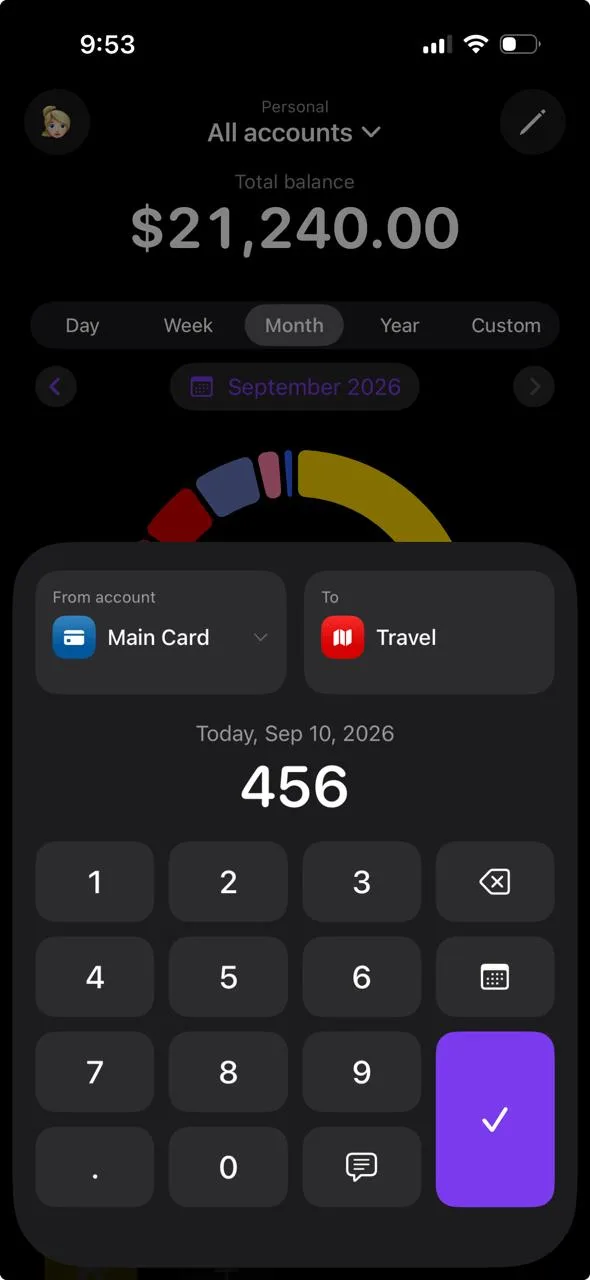
Starting a budget doesn’t require a finance degree, a complicated spreadsheet, or hours of your weekend. All you really need is a simple way to see what’s coming in, what’s going out, and one small habit to keep checking in. That’s it. Everything else is optional.
If you’ve tried budgeting before and quit after a week, you’re not bad with money — you probably just started with a system that was harder than it needed to be. Here’s a version that actually sticks.
Why most first attempts at budgeting fail
Before getting into the how, it’s worth understanding why budgeting has a reputation for not working. It’s rarely a willpower problem. It’s almost always a design problem.
Too many categories. Some budgeting templates ask you to split spending into 20+ categories before you’ve even tracked a single transaction. That’s backwards — you end up spending more time deciding whether something is Entertainment or Personal Care than actually managing money.
Spreadsheets that require constant upkeep. A spreadsheet only works if you open it. If logging a $4 coffee means opening a laptop, finding the right tab, and typing into the right cell, the system will get abandoned within two weeks — not from a lack of discipline, but because the friction is disproportionate to the task. This is exactly why budgeting without a spreadsheet has become the default for most people who actually stick with tracking long-term: the tool needs to be as fast as the decision it’s recording.
Budgets built on how you wish you spent, not how you actually spend. A lot of first budgets are aspirational: $200 for groceries, $50 for entertainment. When reality doesn’t match the plan by week two, it reads as failure — when the real issue was an unrealistic starting number, not a lack of discipline.
The fix for all three is the same: lower the friction, and build the plan from real numbers instead of guesses.
Step 1: Track before you plan
For the first one to two weeks, don’t try to control anything. Just log what you spend. This single step does more for a budget’s long-term success than any rule about categories or percentages, because it replaces guessing with facts.
You don’t need every transaction categorized perfectly. You need enough entries to answer one honest question at the end of the week: where did the money actually go? The category that surprises people is rarely the obvious one — it’s usually food delivery, subscriptions, or small recurring charges that don’t register individually but compound fast.
If typing every transaction into a spreadsheet already sounds tedious, that’s a sign you need a faster tool, not more discipline. Logging an expense should take seconds, not minutes — pick a category, enter an amount, done.
A quick word on budgeting methods
You’ll come across several named systems while researching this — zero-based budgeting (every dollar assigned a job before the month starts), the envelope method (physical or digital “buckets” for each category), and the 50/30/20 split mentioned above. None of them are wrong, and none of them are mandatory. They’re just different levels of structure for the same underlying goal: knowing where your money goes before it’s gone.
For a first attempt, the simplest version — track everything, group it into a handful of honest categories, review weekly — outperforms a more rigid system you’re likely to abandon. You can always graduate to zero-based budgeting or envelopes later, once the basic habit of tracking is already automatic.
Step 2: Pick a small number of categories that match your real life
Once you have a week or two of real data, group it into categories that reflect how you actually spend — not a generic template. This is usually the easiest way to categorize expenses without overthinking it: start broad, and only split a category later if it turns out to be doing too much work. Most people do fine with somewhere between 6 and 10 categories to start. More than that, and you’re spending your mental energy sorting instead of understanding.
A simple starting set often looks like:
- Housing (rent or mortgage, utilities)
- Groceries
- Transportation
- Dining out
- Subscriptions
- Everything else (a genuine catch-all — don’t feel like you need a category for every possible thing)
You can always split a category later if it turns out to be doing too much work — for example, splitting “Everything else” once you notice it’s mostly one thing, like takeout coffee.
Step 3: Set numbers based on your own data, not a rule of thumb
You’ll see budgeting rules like the 50/30/20 split (50% needs, 30% wants, 20% savings) recommended everywhere. Treat it as a reference point, not a law — someone with high rent in an expensive city and someone with low rent in a smaller one are working with fundamentally different constraints, and no single split fits both honestly.
The more reliable approach: use the numbers you tracked in Step 1 as your baseline, not someone else’s percentages. If you spent $420 on groceries last month and that felt sustainable, $420 is a more honest target than a generic guideline claiming it should be $300.
Step 4: Build one small weekly habit, not a daily obligation
The budgets that survive long-term usually aren’t the ones with the most detailed tracking — they’re the ones with the lightest maintenance habit. If you’re looking for the real answer to how to stick to a budget past the first month, it’s not more tracking or stricter rules — it’s a lighter habit you’ll actually keep. A five-minute weekly check-in (same day, same time — Sunday evening works well for a lot of people) is usually enough to:
- Log any transactions you didn’t catch in the moment
- Glance at your category totals for the week
- Notice early if one category is running ahead of pace, while there’s still time to adjust
Daily obsessive checking tends to create anxiety and burnout. A weekly rhythm is sustainable for most people, and gives you enough distance to see patterns instead of individual transactions.
Step 5: Expect to adjust the plan — that’s not failure
A first budget is a draft, not a contract. If you consistently go over in one category, that’s information, not a moral failing. Either the number was unrealistic, or that category matters more to you than you initially planned for — and both are fine reasons to revise it.
The goal isn’t a perfect budget on the first try. It’s a system you’ll actually keep using six months from now, which will always beat a “perfect” plan you abandon in three weeks.
This article is for informational purposes and does not constitute financial advice.
Written by the Your Money team. We build tools to help people take control of their finances without giving up their privacy.
Frequently asked questions
- Do I need to connect my bank account to start budgeting?
- No. You can build a complete, accurate budget by manually entering transactions — many people prefer this because it means there's no bank login to hand over to a third-party app, and manual entry tends to build more day-to-day awareness of spending than automatic syncing does.
- How many categories should a beginner budget actually have?
- Somewhere between 6 and 10 is a reasonable starting point for most people. Fewer, and you lose useful detail; more, and tracking becomes a chore. You can always split a category later once you see it's doing too much work.
- What if I go over budget in the first month?
- That's normal and expected — treat your first month as data collection, not a test you can fail. Use what you learn to set more realistic numbers for month two rather than trying to force the original plan to work.
- Is the 50/30/20 rule a good place to start?
- It's a reasonable reference point, but not a rule you need to follow exactly. Your own tracked spending from the first couple of weeks is a more accurate baseline than any generic percentage split.