 Your Money
How Much Should You Have in an Emergency Fund?
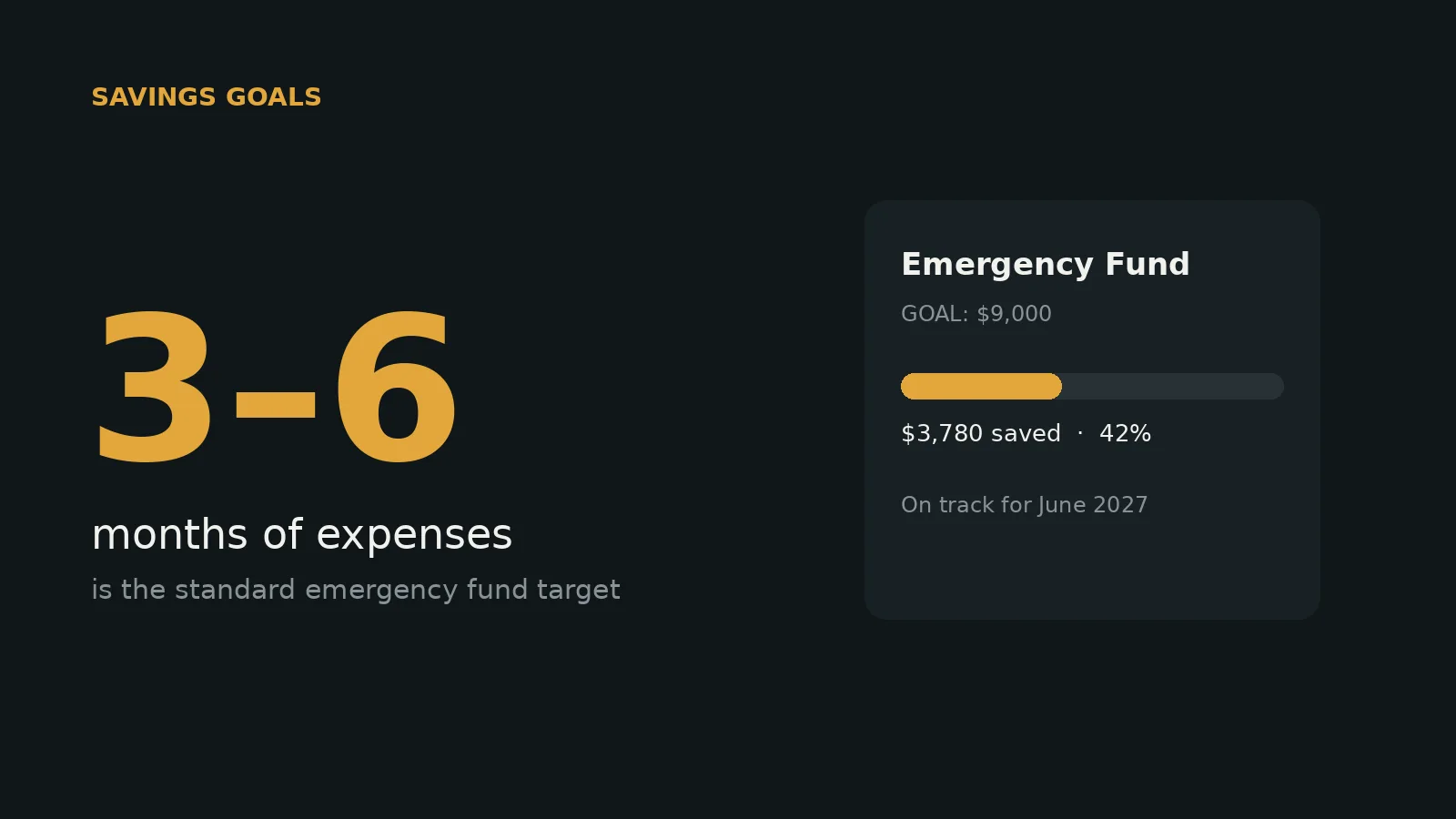
The standard advice is 3 to 6 months of essential expenses, but that range exists because the right number depends heavily on your specific situation — not because anyone’s being vague on purpose. A single-income household with kids and a job in a volatile industry needs a different cushion than two people with stable jobs and no dependents.
Here’s how to figure out where you actually fall in that range, instead of picking a number because it sounds right.
Why “months of expenses,” not a fixed dollar amount
An emergency fund exists to cover the gap between losing income and replacing it — a layoff, a medical issue, a major unplanned repair. That gap is measured in time, not dollars, which is why the advice is framed in months rather than a flat number like $10,000. $10,000 covers a very different amount of runway for someone with a $2,000/month essential budget than for someone with a $6,000/month one.
What actually counts as an “expense” here
This is the part most people get wrong, and it matters because it changes your target by a lot. An emergency fund is meant to cover essential expenses — rent or mortgage, utilities, groceries, insurance, minimum debt payments, transportation to get to work. It is not meant to fully replace your entire current spending, including dining out, subscriptions, and discretionary purchases.
Add up only the essentials, multiply by your target number of months, and you’ll usually land on a smaller, more achievable number than if you’d used your full monthly spending as the baseline. If you’re not sure what your essentials actually add up to, tracking your spending for a week or two is the fastest way to find out.
What pushes you toward 3 months vs. 6 (or more)
Toward the lower end (3 months):
-
Dual income household — if one person loses their job, the other’s income still covers most essentials
-
Stable, in-demand skills that would transfer to a new job relatively quickly
-
No dependents relying solely on your income
Toward the higher end (6 months or more):
-
Single income supporting a household
-
Irregular or commission-based income, where “normal” already fluctuates month to month
-
Dependents — kids, aging parents, anyone whose stability depends on yours
-
Working in an industry prone to layoffs or seasonal volatility
-
Existing health conditions that could mean unpredictable medical costs
None of these factors are disqualifying on their own — most people are a mix of a few from each list. The point of going through them individually is landing on a target that reflects your actual risk, not a number you saw in a headline.
Building it before you have it fully funded
If 3–6 months feels like an impossibly large number relative to what you can save right now, you’re not alone, and the standard advice accounts for this: most guidance points toward building a smaller starter fund first — commonly somewhere around $500–$1,000 — before splitting your attention between debt payoff and continuing to grow the fund toward the full target.
The logic here matters more than the specific number. With zero savings, a single unexpected expense (a car repair, a medical bill) usually turns into new debt on a credit card, which quietly undoes whatever progress you were making on debt you already owed. A modest starter buffer breaks that cycle, even before it’s anywhere close to a full 3–6 month cushion.
This is also a case where the debt payoff math and the emergency fund math pull in different directions, and there’s no universally “correct” resolution — some people are more comfortable throwing every spare dollar at high-interest debt and accepting the risk of a thin safety net; others sleep better prioritizing a fuller cushion even if it means debt takes slightly longer to clear. Both are reasonable positions. What consistently doesn’t work well is having neither a starter fund nor a clear debt plan — that’s the combination that tends to leave people stuck reacting to whatever comes up next instead of making progress on either goal.
A few practical ways to build the starter fund faster, if the goal is getting past that first $500–$1,000 milestone quickly rather than slowly:
Automate a fixed transfer the day you’re paid, before the rest of the month’s spending has a chance to absorb it. A smaller automatic amount that actually happens beats a larger “whatever’s left over” plan that often doesn’t.
Redirect one specific recurring cost — a subscription you don’t use much, a recurring delivery fee — directly into the fund rather than letting it blend into general savings.
Treat windfalls as fund contributions by default — a tax refund, a bonus, cash gifts. It’s easy to let these get absorbed into regular spending; deciding in advance where they go removes that decision in the moment.
Revisit the number as life changes
The right target isn’t something you calculate once and forget. A new dependent, a move to a single income, a career change into a less stable industry, or taking on a mortgage all shift where you land on the 3-to-6-month range — usually upward. On the other end, paying off a major debt or moving to a lower cost of living can reasonably shift it down. Treating the number as fixed forever means either over-saving well past the point it’s protecting you from anything new, or under-saving relative to a risk profile that’s changed since you last did the math.
Where to actually keep it
An emergency fund needs to be liquid — accessible within a day or two, without a penalty. A high-yield savings account, separate from the checking account you spend out of day to day, is the common answer. Keeping it in a separate account isn’t just about interest — it also removes the temptation to dip into it for non-emergencies, since it’s not sitting in the same balance you check before a discretionary purchase.
Money in a CD, a retirement account, or invested in the market isn’t a good fit for this specific purpose, even if the returns look more attractive — the whole point of this money is that it’s there instantly and without a penalty when you need it, and investment accounts can also lose value at exactly the moment (a recession, a market downturn) when job loss is more likely in the first place.
Doing this with a partner or household
If you’re building an emergency fund with a partner or as a household rather than solo, the target calculation works the same way — essential expenses times your chosen number of months — but it helps to agree on the number together rather than one person setting it unilaterally. A shared budget makes it easier to track progress toward a joint goal like this one, since both people can see the same number moving instead of one person tracking it alone and reporting back.
This article is for informational purposes and does not constitute financial advice.
Written by the Your Money team. We build tools to help people take control of their finances without giving up their privacy.
Frequently asked questions
- Is 3 months enough, or do I really need 6?
- Three months is a reasonable minimum if you have stable dual income, no dependents, and skills that transfer easily to another job. Six months is the safer target if you have irregular income, one household income, dependents, or work in a volatile industry.
- Should I build an emergency fund before or while paying off debt?
- Most guidance suggests building a small starter fund (often around $500–$1,000) first, then splitting focus between debt payoff and continuing to grow the fund. Having zero savings means any surprise expense turns into new debt, which undoes progress on the debt you're already paying down.
- Where should I actually keep an emergency fund?
- Somewhere liquid and separate from your everyday spending account — a high-yield savings account is the common choice. Money that requires a penalty to withdraw, like a CD or investment account, isn't a good fit for a fund you may need access to immediately.
- What counts as an "expense" when calculating my target number?
- Essential expenses only — rent or mortgage, utilities, groceries, insurance, minimum debt payments, transportation. Discretionary spending like dining out or subscriptions isn't what you're protecting against losing income, so it's reasonable to leave it out of the calculation.